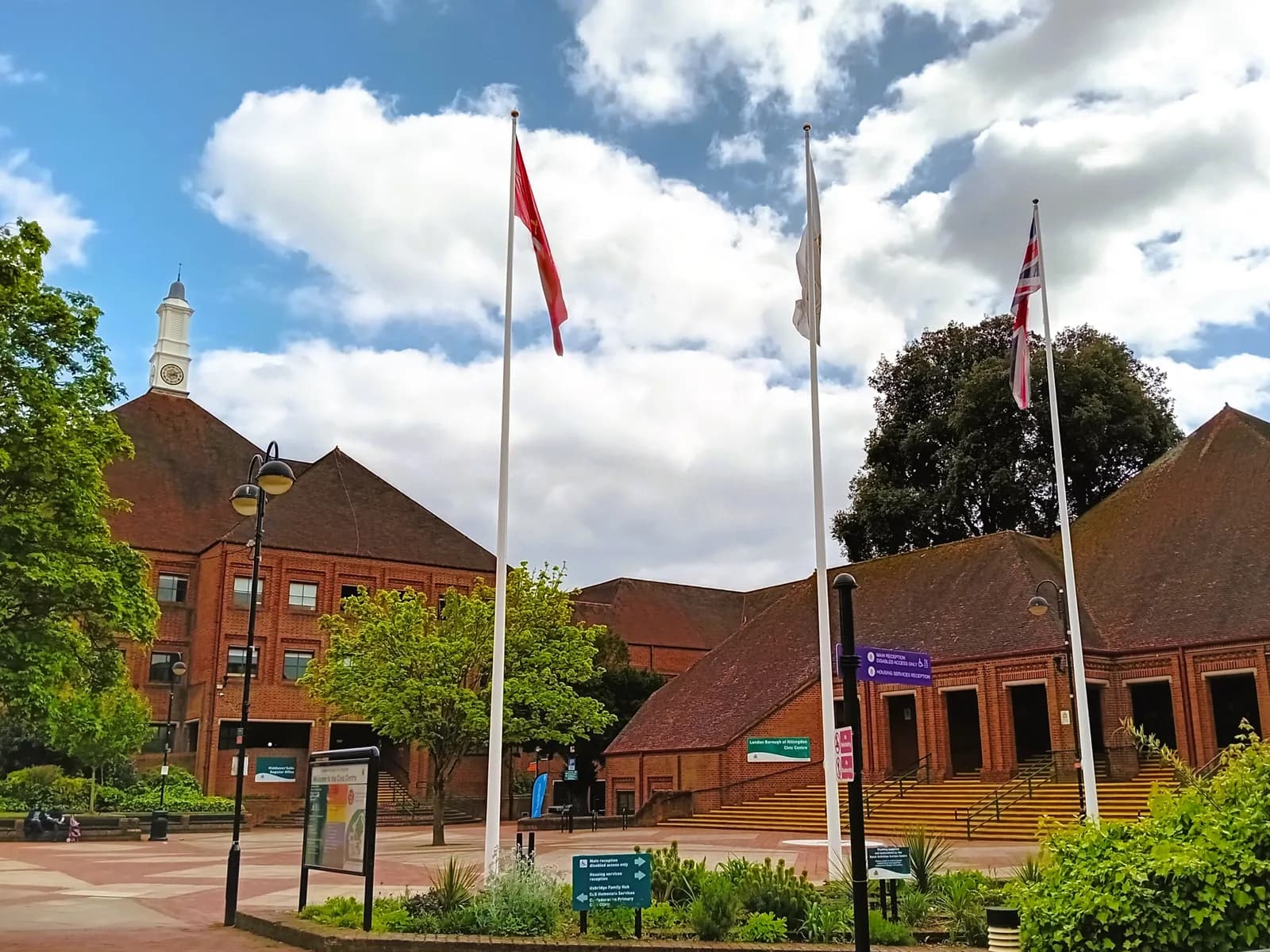
Hillingdon Magazine arrives as a new voice for residents, workers, and visitors across one of London's most distinctive boroughs. This publication will document the issues, events, and everyday stories that shape life across Hillingdon's towns and villages.
About the Borough
The London Borough of Hillingdon stretches across 44 square miles of west London, making it the second largest borough in the capital by area. It borders Buckinghamshire to the north and west, Harrow to the north-east, Ealing to the south-east, and Hounslow to the south. The borough encompasses several distinct population centres, each with its own character.
Uxbridge serves as the administrative heart of the borough. The town centre offers pedestrianised shopping streets and the Hillingdon Civic Centre, which houses the local council's headquarters. Uxbridge maintains its historical identity as a market town while functioning as a modern commercial hub. The Metropolitan and Piccadilly Underground lines both terminate here, providing connections to central London and beyond.
Ruislip sits to the north, centred around an ancient parish church and Manor Farm. The area retains significant green space, including Ruislip Woods and Ruislip Lido. To the south, Hayes has developed from its industrial heritage, once home to the EMI and Nestlé factories, into a diverse residential and commercial centre. West Drayton, in the far west, sits adjacent to Heathrow Airport and has seen substantial residential development in recent years.
Transport and Geography
Hillingdon's geography creates both opportunities and challenges. The borough contains Heathrow Airport, Britain's busiest aviation hub, which employs thousands of local residents while generating noise and environmental concerns. The Grand Union Canal cuts through the southern part of the borough, offering recreational walking and cycling routes.
Rail connections include the Metropolitan and Piccadilly lines, which serve Uxbridge and several stations along the A40 corridor. The Great Western Main Line and Elizabeth Line pass through the south of the borough, with stations at Hayes, Harlington, and West Drayton providing links to central London, Reading, and Heathrow.
Green Spaces
Despite its urban development, Hillingdon retains substantial green belt land. The borough contains parks, nature reserves, and farmland that provide contrast to its town centres. Colne Valley Regional Park lies partly within Hillingdon, offering walking routes along the River Colne. The London Loop long-distance footpath passes through the borough, connecting walkers to green spaces across the capital.
Cranford Countryside Park, located in the south of the borough, represents the type of accessible green space that local residents use regularly. The park contains woodland, meadows, and the River Crane, providing habitat for wildlife alongside recreational facilities.
What This Magazine Will Cover
Hillingdon Magazine will focus on the practical information and stories that matter to people living and working here. This includes planning decisions affecting local neighbourhoods, changes to council services, transport disruptions and improvements, and developments at Heathrow Airport.
The magazine will also cover community initiatives, local business openings and closures, school news, and cultural events across the borough's towns. We will report on environmental issues affecting Hillingdon's green spaces and air quality. Sport will feature, from non-league football to grassroots cricket and rugby.
We aim to provide accurate, factual reporting without promotional language or speculation. When information is unconfirmed, we will say so. Our focus remains on serving readers who need reliable news about their area.
Get in Touch
We welcome tips, story suggestions, and corrections from readers. If something is happening in your part of Hillingdon that we should know about, please contact us. This publication exists to serve the borough, and we depend on local knowledge to do that effectively.